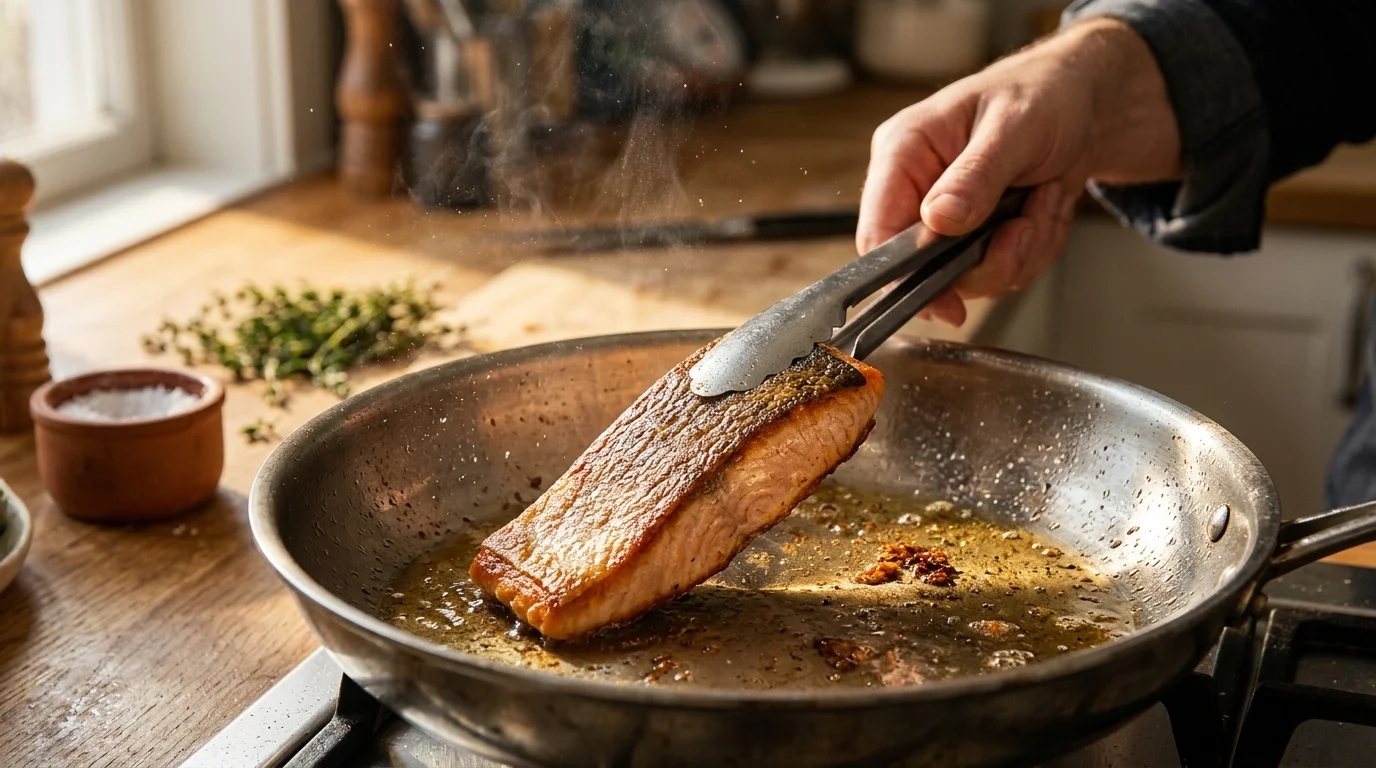
Home cooks transitioning away from synthetic nonstick coatings toward stainless steel cookware regularly confront the frustrating problem of seared proteins and delicate eggs fusing to the skillet. In kitchens across the United States, a popular culinary explanation asserts that adding oil to a cold pan causes the fat to become trapped inside microscopic pores before the metal thermally expands, whereas preheating a dry pan first creates an insulating vapor barrier. However, an examination of kitchen guidance and cookware commentary shows that while the practical instruction—preheat the pan, add fat, then introduce the food—is widely recommended, the underlying physical mechanisms remain a subject of conflicting reports among culinary publications.
The Microscopic Pore Debate and Surface Physics
The standard explanation circulating in culinary guides suggests that stainless steel, despite looking smooth to the naked eye, features microscopic ridges, valleys, and pores. Proponents of this view argue that pouring cold cooking oil into an unheated skillet allows the fat to settle into those tiny crevices; as the metal heats and expands, it supposedly pinches the oil and food proteins into the surface, resulting in stubborn sticking.
However, secondary culinary commentary directly challenges this materials-science framing. According to Elevating Kitchen, stainless steel cookware actually possesses a smooth, non-porous surface, a characterization that undercuts the assertion that microscopic pores open and close to trap cold oil. Meanwhile, other cooking resources focus less on thermal expansion of pores and more on chemical interactions and surface roughness. According to Decor With Style, preventing food from adhering to metal relies heavily on fundamental stove management—specifically preheating properly, utilizing enough cooking fat, and resisting the urge to shift proteins before a crust has formed—rather than relying on a single oil-addition trick.
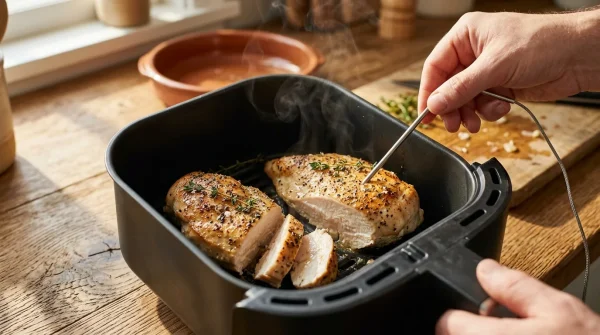
When protein-rich foods like chicken breasts, fish fillets, or eggs hit an insufficiently heated metal surface, chemical bonds form between the food and the iron atoms in the steel. Heating the oil quickly in a pre-warmed pan reduces the viscosity of the fat, allowing it to coat the cooking surface evenly and act as a physical buffer between the raw ingredients and the bare metal.
- Why Cooks Choose Manual Food Mills Over Immersion Blenders for San Marzano Tomatoes
- Swapping Kosher Salt Brands Can Change Recipe Salinity by Half in Volume Measurements
- Why Lean Proteins Dry Out in Air Fryers—And What Actually Fixes It
- Light, Heat, and Air Degrade Extra Virgin Olive Oil Even Under Careful Storage
- Cast Iron Makers Confirm Dish Soap Is Safe, Though Rancid Seasoning Claims Lack Proof
The Water-Drop Test and the Leidenfrost Effect
To determine when a dry stainless steel skillet has reached the proper temperature for adding oil, culinary instructors frequently point to the water-drop test. According to a cookware care guide from Non-Toxic Kitchen, cooks should preheat stainless steel over low to moderate heat and test readiness using water droplets. When a flicked drop of water no longer hisses and evaporates immediately, but instead forms a cohesive bead that glides and dances across the metal, the pan has reached the threshold for cooking.
This visual phenomenon is driven by the Leidenfrost effect. As noted by Elevating Kitchen, the Leidenfrost effect occurs when a liquid contacts a surface that is significantly hotter than the liquid’s boiling point, generating an insulating layer of vapor beneath the droplet that keeps it suspended above the metal.
While the water-drop test is a reliable indicator that a pan is hot, culinary analysts caution against overgeneralizing the physics. Demonstrating that a single drop of water floats on a cushion of steam does not automatically prove that a comparable, continuous vapor barrier forms beneath a heavy piece of steak or a cold egg to prevent sticking. Instead, the test simply confirms that the skillet holds enough thermal energy so that when oil and moisture-rich food are added, the surface temperature will not plummet into the zone where proteins easily bond to steel.
Cold Oil vs. Hot Pan: Practical Kitchen Technique
The debate over whether oil must strictly be added after preheating also sees nuanced reporting. While Non-Toxic Kitchen and similar guides advocate heating the pan before introducing fat, derivative reporting aggregated by My.ua notes that while stainless steel is commonly preheated dry before oiling, cooks must be careful to avoid excessive temperatures. Allowing a dry multi-clad or disc-bottom skillet to sit over a high flame for too long can warp the metal and cause cooking fats to smoke and degrade the moment they touch the pan.
For home cooks looking for consistent results without scorching their kitchen oils, the practical takeaway comes down to heat control and patience:
- Moderate Preheating: Place the dry stainless steel pan over low to medium heat for a few minutes to allow the thermal energy to distribute evenly across the cooking surface.
- The Visual Cue: Use a few drops of water to check if beads form and roll, or add the cooking oil and watch for it to thin out and shimmer gently before adding ingredients.
- Temperature Management: Avoid dropping refrigerator-cold proteins directly into the skillet, as the sudden temperature drop cools the oil and encourages sticking.
- Natural Release: Once protein hits the hot fat, leave it undisturbed. As the surface of the meat or fish browns and coagulates, the Maillard reaction forms a crust that naturally releases from the steel when it is ready to flip.
Frequently Asked Questions
What controlled experiment shows that adding oil before or after preheating changes sticking on stainless steel?
Current consumer cooking guides do not document a controlled laboratory comparison proving that the sequence of oil addition alone causes food to stick when the oil starts cold. Instead, recommendations are based on practical kitchen observations that heating the pan dry makes it easier to gauge surface temperature via the water-drop test without burning the cooking fat during the warm-up phase.
Does the ‘microscopic pores’ explanation apply to a particular pan finish, and what evidence supports it?
There is no primary materials-science evidence in standard culinary guides verifying that thermal expansion closes microscopic pores to block oil. In fact, conflicting commentary from Elevating Kitchen describes stainless steel as a smooth, non-porous surface, suggesting the pore explanation is a culinary metaphor rather than an established metallurgical fact.
Is a vapor layer actually present between food and stainless steel during ordinary cooking?
While the Leidenfrost effect creates an insulating vapor layer under a liquid water droplet on a very hot surface, cooking guides do not establish that a sustained vapor barrier lifts solid food above the pan during routine frying. However, rapid steam release from the surface of moist food hitting hot oil does help sear the exterior quickly before proteins can bond to the metal.
How do food moisture, protein coagulation, oil quantity, and timing affect sticking independently of oil sequence?
According to Decor With Style, sticking is heavily influenced by pan temperature, using an adequate layer of fat, and timing. Excess surface moisture on food Steams the pan and lowers its temperature, while attempting to flip proteins before they have fully coagulated and browned will tear the food regardless of when the oil was poured.