Generations of home cooks have guarded their cast iron skillets against the kitchen sink sponge, convinced that a single drop of detergent would ruin a hard-earned cooking surface. In recent culinary discussions, a counter-claim has emerged: that skipping liquid dish soap leaves unpolymerized oils on the metal, which then oxidize and turn rancid, imparting bitter off-flavors to food rather than building a non-stick patina. While major cookware manufacturers and culinary publications confirm that modern dish soap is completely safe for routine cleanup, industry guidance shows that the specific chemical warning regarding unpolymerized post-cooking oil turning rancid remains unverified.
According to care instructions from Lodge Cast Iron, the leading American manufacturer of cast iron cookware, washing a seasoned skillet with warm, soapy water is an acceptable and effective way to remove everyday food residue. Similarly, reporting from Southern Living corroborates that mild dish soap can be safely used on a well-seasoned pan without stripping its protective layer. However, cookware specialists note a clear distinction between washing away leftover cooking grease and the actual mechanics of how seasoning forms or degrades.
The Chemistry of Seasoning and the Lye Myth
To understand why soap is no longer the enemy of cast iron, it helps to examine what seasoning actually is. As explained by Lodge Cast Iron, seasoning is not a delicate layer of loose cooking grease; it is a layer of carbonized, polymerized oil that has been baked onto the iron at high heat. During this heating process, the fatty acids in the cooking oil bond to one another and to the microscopic pores of the metal, creating a hard, plastic-like finish that naturally releases food and repels water.
The longstanding culinary taboo against washing cast iron with soap stems from an earlier era of household chemistry. According to care documentation from Cast Iron Company, traditional, old-fashioned soaps were formulated with harsh, active lye. Because lye is highly caustic, it readily breaks down and strips away polymerized fat. Today, commercial liquid dish soaps are produced through a neutralized saponification process or rely on mild synthetic surfactants. These gentle formulas easily lift liquid cooking fats and food particles down the drain, but they lack the chemical strength to dissolve a properly bonded, carbonized seasoning layer.
Evaluating the Rancid Oil and Bitter Flavor Claims
While the safety of modern dish detergent on cast iron is settled among manufacturers, the secondary assertion—that failing to use soap leaves behind unpolymerized oils that inevitably oxidize into a bitter, rancid coating—is not established by cookware care standards. Differing perspectives exist between viral kitchen theories and documented manufacturer findings.
On a general chemical level, culinary and nutritional guides—such as reporting from Beeyoutiful—note that culinary oils exposed to heat, light, and oxygen can undergo oxidation, breaking down into compounds that produce unpleasant odors and bitter, rancid flavors. Proponents of mandatory soap washing argue that this exact oxidation occurs inside a skillet if post-cooking grease is merely wiped away with a paper towel rather than washed with detergent.
However, neither Lodge Cast Iron nor specialist guides like Cast Iron Company substantiate that skipping soap triggers a specific rancid polymerization pathway. In fact, standard manufacturer maintenance routines explicitly instruct cooks to rub a fresh, thin coat of unpolymerized vegetable or cooking oil onto the warm pan immediately after drying it, leaving that raw oil on the surface while the pan is stored between uses. If unheated oil left on iron routinely turned rancid under normal kitchen turnover, standard post-wash oiling would cause the exact same bitterness.
Furthermore, when a cast iron skillet develops a tacky, gummy, or unpleasant surface, Cast Iron Company attributes the problem to applying too much oil during the high-heat oven seasoning process, rather than skipping soap after frying dinner. When excess oil pools during baking, it cannot polymerize evenly, leaving behind a sticky residue that must be scrubbed away or baked off.
Practical Maintenance: Wash, Dry, and Oil
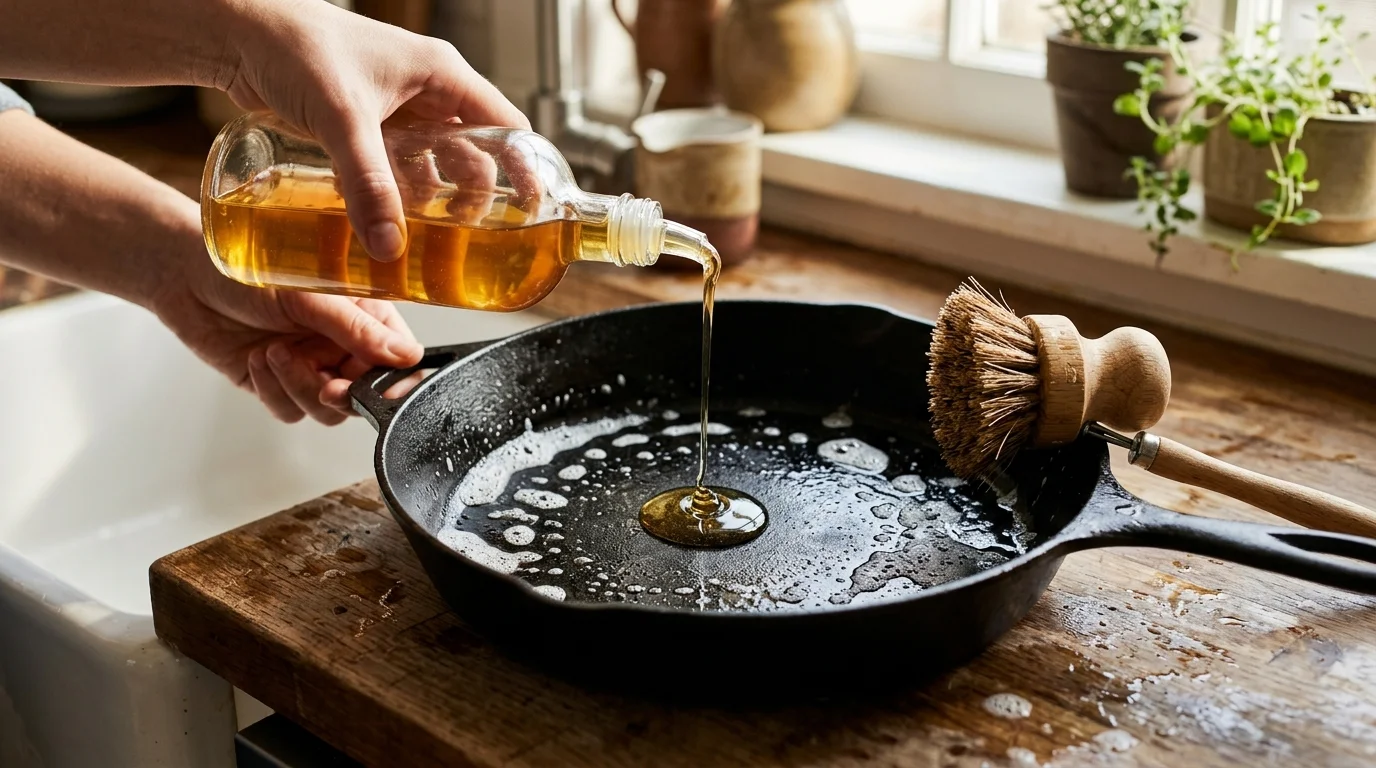
For home cooks looking to keep their skillets in peak condition without overcomplicating nightly cleanup, manufacturers recommend a straightforward three-step routine: wash, dry, and oil. Using a small amount of mild dish soap with warm water is especially practical after searing strongly flavored foods, such as fish, garlic, or spiced meats, where lingering food particles could transfer flavors to the next morning’s pancakes or cornbread.
Rather than worrying about soap, cooks should focus on the true enemy of cast iron: lingering moisture. Soaking a pan in the sink, leaving it to air dry in a dish rack, or running it through a dishwasher will quickly penetrate the seasoning and cause the raw iron to rust. For stubborn, stuck-on food, Lodge Cast Iron advises simmering a shallow layer of water in the pan for 3 to 5 minutes, letting the skillet cool, and lifting the debris with a plastic pan scraper or nylon brush before giving it a quick wash.
Once rinsed, the cookware should be dried immediately and thoroughly with a lint-free towel. Cast Iron Company recommends placing the towel-dried skillet over a medium-low stovetop burner for a few minutes to evaporate any microscopic moisture trapped in the metal. While the iron is still warm, rubbing a minimal drop of neutral cooking oil, grapeseed oil, or avocado oil across the surface—and wiping it down with a clean paper towel until the metal looks completely dry—protects the pan from humidity and sets the stage for the next meal.
Frequently Asked Questions
What direct evidence shows that skipping dish soap leaves unpolymerized oil that turns rancid on cast iron?
There is no verified experimental evidence from cookware manufacturers confirming this specific mechanism. While culinary oils can oxidize and turn rancid over prolonged storage, manufacturer guidance from Lodge Cast Iron treats post-cooking soap use simply as an effective way to clear away food buildup, not as a mandatory chemical defense against rancid polymerization.
Does a bitter flavor in cast iron come from oxidized seasoning or leftover food residue?
Off-flavors in a skillet typically stem from uncleaned food debris, burnt carbon buildup, or old cooking grease left sitting in a rarely used pan. A sticky or gummy coating is usually caused by applying too much oil during the oven-seasoning process, which Cast Iron Company notes can be prevented by wiping the pan until it looks dry before baking it at 400°F for one hour.
How do detergent type, cleaning technique, and drying practices affect seasoning durability?
Mild, modern liquid dish soaps and nylon brushes or plastic pan scrapers will not harm established seasoning. In contrast, caustic lye cleaners, dishwashers, and aggressive daily scrubbing with steel wool can strip the carbonized oil layer. Prompt towel drying followed by brief stovetop heating is the most reliable way to prevent rust.
Sources
- Lodge Cast Iron – Seasoned Cast Iron Cleaning & Care
- Southern Living – 4 Foods You Should Never Cook In A Cast-Iron Skillet, According To Experts
- Cast Iron Company – How to Season and Clean Your Cast Iron Cookware
- Beeyoutiful – When Good Oils Go Bad: Understanding Oxidation in Foods, Supplements, and Skincare