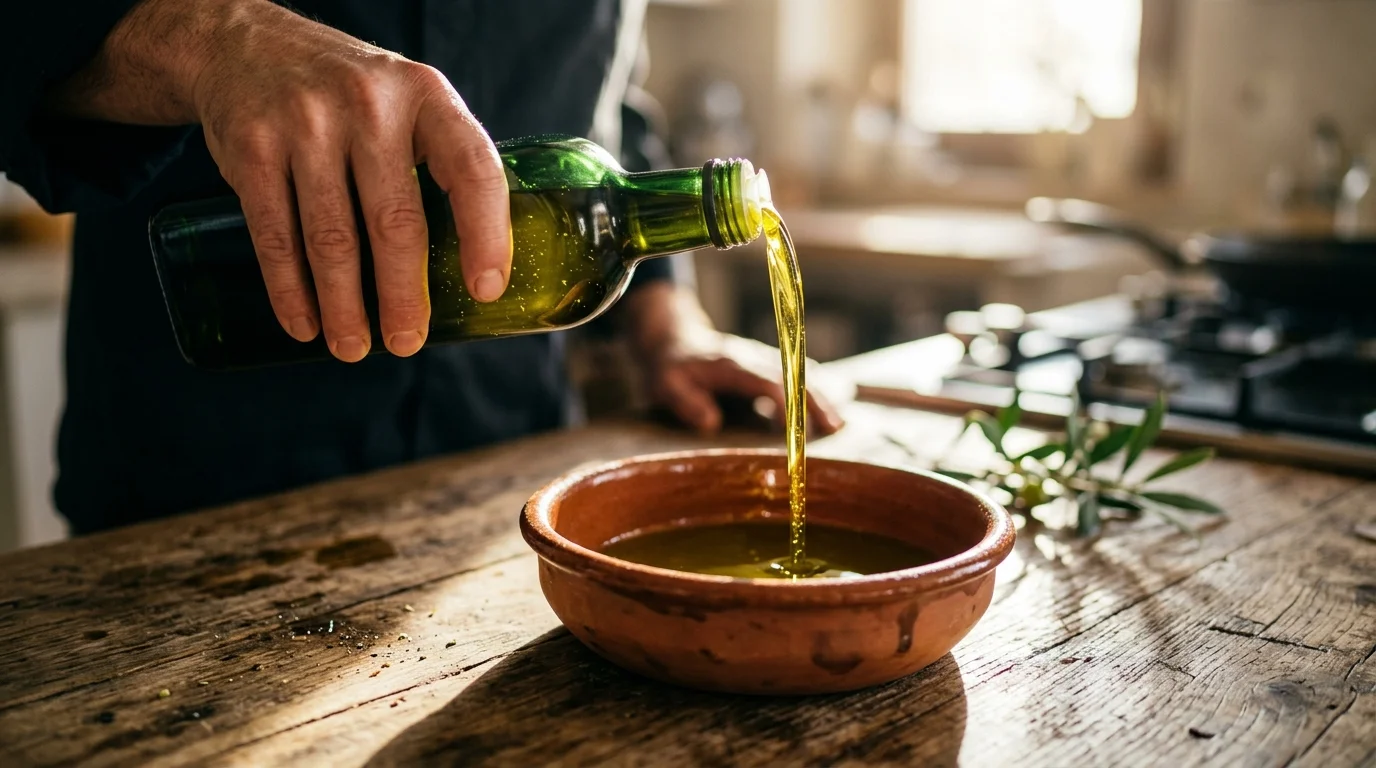
Extra virgin olive oil faces steady chemical and sensory decline when exposed to light, heat, and oxygen, though recent industry reporting shows that the exact timeline of countertop degradation remains more nuanced than popular kitchen warnings suggest. While consumer advice frequently warns that clear glass dispensers ruin expensive finishing oils within days, reporting published on October 14, 2026, by Herald Business and on October 8, 2026, by Il Fatto Alimentare points to a broader reality: environmental exposure steadily strips oil of its protective compounds, and even dark bottles stored in cool cellars cannot halt sensory oxidation over extended periods.
For home cooks and restaurant buyers in the United States, understanding how storage conditions interact with packaging helps preserve both the peppery bite of fresh olive oil and the nutritional value of its natural antioxidants. Rather than relying solely on a printed best-before date or assuming a clear cruet ruins oil overnight, consumers must weigh the combined effects of stove-side warmth, repeated air exposure, and bottle tint.
The Environmental Triggers Behind Oil Deterioration
Extra virgin olive oil is fundamentally a fresh fruit juice pressed from olives without chemical treatment or high-heat refining. Because it remains unrefined, it retains delicate aromatic compounds, free fatty acids, and micronutrients that react readily with the surrounding kitchen environment. According to reporting by Herald Business on October 14, 2026, light, heat, and air act as the primary catalysts that accelerate the deterioration of cooking oils.
When cooks decant oil into countertop dispensers or leave bottles unsealed near a cooking range, oxygen and thermal energy speed up chemical breakdown. The Herald Business report cites a 2022 study that examined extra virgin olive oil kept in open brown glass bottles across four distinct temperature settings: 25, 40, 50, and 60°C (approximately 77, 104, 122, and 140°F). In those air-exposed samples, researchers documented faster declines in phenolic compounds and alpha-tocopherol—a key form of vitamin E—as the storage temperature climbed.
Phenolic compounds, commonly referred to as polyphenols, give high-grade extra virgin olive oil its characteristic bitter, pungent finish and help protect the fat molecules from oxidizing. Alpha-tocopherol serves a similar antioxidant function. Once heat and oxygen deplete these natural defenses, the oil loses its vibrant green and fruity aroma, shifting toward flat, greasy, or rancid flavors.
Weighing the Countertop Clear-Bottle Debate
A persistent debate in culinary circles centers on how quickly ordinary kitchen lighting damages oil decanted into clear glass cruets. One widespread kitchen premise asserts that countertop light exposure triggers rapid photo-oxidation within days, destroying polyphenols and turning costly finishing oils rancid well before their printed expiration dates. However, a closer review of the available food-science reporting reveals a conflict between that days-long warning and documented laboratory findings.
While the October 14, 2026 report from Herald Business confirms that light, alongside heat and air, hastens oil deterioration and advises consumers to limit exposure, the reporting does not substantiate a days-long breakdown from clear glass bottles or quantify the exact impact of ordinary indoor countertop lighting. Instead, the hard numbers in that report focus on air-exposed brown glass bottles subjected to elevated temperatures of 25, 40, 50, and 60°C.
Meanwhile, reporting by Il Fatto Alimentare on October 8, 2026, demonstrates that protecting oil from light is only part of the preservation equation. Even when extra virgin olive oil is shielded from light, gradual chemical aging continues inside the bottle. The retrieved evidence supports advising cooks to avoid clear glass and bright countertops as a sensible precaution, even if current reporting does not verify that ambient kitchen light causes complete rancidity in a matter of days.
Why Best-Before Dates Do Not Guarantee Sensory Freshness
Shoppers often treat the minimum durability date printed on an olive oil label as an ironclad guarantee of peak flavor. In reality, an oil can develop noticeable flavor flaws long before—or regardless of—standard shelf-life assumptions, even when kept out of light and heat.
According to the October 8, 2026 report by Il Fatto Alimentare, a storage study tracked six Italian extra virgin olive oils packaged in dark glass and held in complete darkness at roughly 15°C (59°F). Despite these favorable, cellar-like conditions, tasting evaluations revealed that four of the six oils developed sensory oxidation defects by 12 months of storage. The remaining two oils developed sensory oxidation defects by 16 months.
Under international and commercial grading standards, an olive oil must exhibit zero sensory defects—such as mustiness, winey sourness, or rancid notes—and maintain measurable fruitiness to retain its classification as extra virgin. The findings reported by Il Fatto Alimentare highlight a critical distinction for consumers: separating the loss of sensory quality from a product’s printed date. An oil kept in dark glass at 15°C Remains safe to consume at 12 or 16 months, yet it may already display enough sensory oxidation to lose the fresh flavor profile buyers expect when paying a premium for extra virgin quality.
Practical Storage Habits for Home Kitchens
Because heat, air, and light work together to wear down phenolic compounds and alpha-tocopherol, home cooks can take straightforward steps to slow the clock on their pantry staples:
- Keep bottles away from the stove: The 2022 study cited by Herald Business showed that air-exposed oil loses phenolic compounds and alpha-tocopherol faster as temperatures rise from 25°C up to 40, 50, and 60°C. Storing bottles in a cabinet away from ovens, ranges, and dishwashers reduces thermal stress.
- Choose opaque or dark packaging: Purchasing oil in dark glass or tin containers—and avoiding clear glass dispensers for long-term holding—limits light exposure, while keeping caps tightly sealed reduces contact with oxygen.
- Buy quantities you can finish within months: Because the study summarized by Il Fatto Alimentare found sensory oxidation defects emerging at 12 months in four oils and 16 months in two oils even in darkness at about 15°C, buying smaller bottles and rotating stock quickly ensures the oil is used while its peppery aromas remain intact.
Frequently Asked Questions
Does normal indoor kitchen lighting ruin olive oil in clear bottles within days?
Current reporting confirms that light accelerates the deterioration of cooking oils, making dark glass or opaque containers the safer choice. However, the retrieved reports from Herald Business and Il Fatto Alimentare do not quantify the exact intensity of normal indoor countertop lighting or establish a days-long timeline for rancidity in clear bottles.
Is heat, oxygen, or light the bigger threat to a countertop oil bottle?
All three factors contribute to deterioration. In a kitchen setting, a bottle kept next to a warm stove that is opened frequently faces constant oxygen exposure and heat spikes. As noted in the 2022 study cited by Herald Business, air-exposed oil in open brown glass bottles suffered faster drops in phenolic compounds and alpha-tocopherol as temperatures increased across 25, 40, 50, and 60°C.
How can consumers tell the difference between faded freshness and sensory defects?
As extra virgin olive oil ages, a drop in phenolic compounds softens its initial peppery throat catch and bitterness. Sensory oxidation defects—like those detected at 12 and 16 months in the six-oil study reported by Il Fatto Alimentare—go beyond faded fruitiness, introducing stale, waxy, or rancid aromas that disqualify an oil from meeting extra virgin sensory standards even before a printed best-before date passes.